The True Cost of Owning Acreage: What Rural Homebuyers Should Budget For
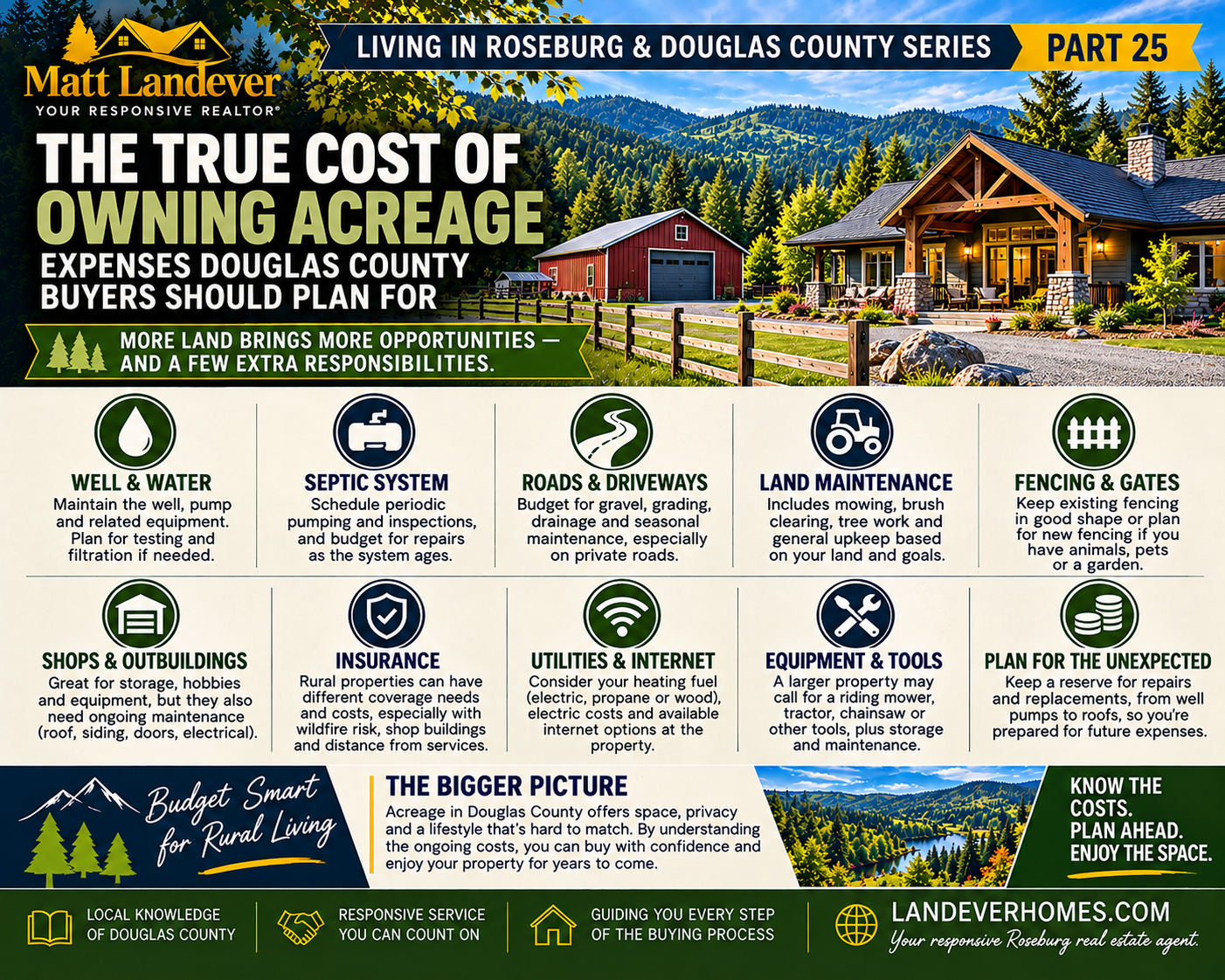
For many buyers moving to Douglas County, owning acreage is a dream.
More privacy. More room to spread out. Space for a shop, garden, animals, or simply enjoying the outdoors.
And depending on the property, you may find features that would be difficult to have with a traditional home in town.
But there's something I always encourage acreage buyers to think about:
The purchase price is only one part of what it costs to own rural property.
Owning five, ten, or twenty acres can come with different responsibilities than owning a home on a smaller residential lot.
That doesn't necessarily mean acreage is expensive to maintain. It means understanding where additional expenses might come from so you can plan accordingly.
1. Wells and Private Water Systems
Many rural homes throughout Douglas County rely on private wells rather than public water systems.
One potential advantage is that you may not have a traditional monthly municipal water bill.
However, the homeowner is responsible for maintaining the well and its associated equipment.
Depending on the property, expenses may include:
Well pump repairs or replacement
Pressure tanks and related equipment
Water quality testing
Water filtration or treatment systems
Electrical costs associated with pumping water
A properly functioning well can provide years of reliable service, but it's important to understand the system you're purchasing.
If you're unfamiliar with private wells, we covered the basics earlier in this series.
2. Septic System Maintenance
Just as many rural properties have private wells, they also have septic systems.
Instead of paying a municipal sewer bill, homeowners are responsible for maintaining their septic system.
That includes periodic inspections and pumping when needed.
The frequency of pumping depends on factors such as tank size, household occupancy, and water usage.
There can also be expenses associated with repairs or replacing components as systems age.
The important thing is understanding the condition of the septic system before purchasing and planning for its future maintenance.
3. Private Roads and Driveways
This is an expense buyers sometimes overlook.
If a property is accessed by a private gravel road or a long driveway, maintenance may be the homeowner's responsibility.
Depending on the property, that could mean:
Adding gravel
Grading or smoothing the road
Maintaining drainage ditches and culverts
Removing fallen trees or debris
Repairing damage caused by storms or heavy use
Some properties have shared road maintenance agreements, while others leave maintenance entirely to the individual owner.
Understanding who is responsible for the road can help you avoid unexpected expenses later.
4. Maintaining the Land
One of the biggest differences between owning a traditional residential lot and acreage is simply the amount of land that needs attention.
A larger property may have open fields, wooded areas, pastures, trails, or landscaped spaces.
How much work is required depends on the property and how you intend to use it.
For example, a mostly wooded five-acre property may have very different maintenance needs than five acres of irrigated pasture.
Some homeowners handle everything themselves.
Others hire help for mowing, brush clearing, tree work, or other maintenance.
Neither approach is necessarily better. It depends on your time, equipment, and preferences.
5. Equipment and Tools
If you're moving from a home with a small yard to ten acres, your existing lawn mower might not be enough.
Depending on the property, you may eventually want equipment such as:
A riding mower or compact tractor
A brush cutter
A chainsaw
A utility trailer
Tools for maintaining fencing and drainage
Not every acreage owner needs a tractor.
But buyers should consider whether the property will require equipment they don't currently own.
You may also want to think about storage, fuel, maintenance, and repairs for that equipment.
6. Fencing and Gates
Fencing can be an important part of rural property ownership, especially if you have animals, pets, or a garden.
But fencing is also something that requires maintenance.
Posts deteriorate.
Gates need adjustment.
Trees or branches can damage fence lines.
And if you're planning to add fencing, the cost can vary significantly depending on the terrain, materials, and total distance.
A property that already has well-maintained fencing may be especially appealing if you intend to keep livestock or establish a large garden.
7. Homeowners Insurance
Insurance is another expense worth investigating early.
Rural properties can have different insurance considerations than homes in town.
Factors such as wildfire exposure, distance from fire protection services, construction, and property characteristics may influence coverage availability and pricing.
If a property has a large shop, barn, or other outbuildings, you'll also want to understand whether those structures are covered and to what extent.
I recommend obtaining an insurance quote during the home-buying process rather than assuming the cost will be similar to your current home.
8. Shops, Barns, and Outbuildings
One of the great advantages of acreage is the possibility of having additional buildings.
A shop can provide space for hobbies, equipment, vehicles, or projects.
A barn may be useful for livestock or storage.
But these structures also have roofs, siding, doors, electrical systems, and other components that may eventually need maintenance.
When evaluating a property, consider the condition of these buildings alongside the house itself.
A large shop can be a wonderful feature, but it should also fit your needs and budget.
9. Utilities and Internet
Rural properties may have different utility arrangements than homes within city limits.
For example, some homes rely on propane for heating or other appliances.
Others may have electric heating, wood stoves, or a combination of systems.
Internet service is another consideration.
Depending on the location, buyers may have access to wired internet, fixed wireless, or satellite service.
It's worth comparing available plans and understanding any installation or equipment costs before purchasing.
10. Planning for Unexpected Expenses
One of the smartest things any homeowner can do is maintain a reserve for repairs.
That's especially useful when you own a property with additional systems and improvements.
A rural property may have a well, septic system, long driveway, fencing, outbuildings, and several acres of land to maintain.
You don't necessarily need to replace or repair all those things regularly.
But having money set aside means you're better prepared when something eventually needs attention.
I encourage buyers to think beyond the mortgage payment and consider what a realistic monthly ownership budget might look like.
Does Owning Acreage Always Cost More?
Not necessarily.
Every property is different.
A well-maintained rural home with a reliable well, septic system, manageable acreage, and minimal additional structures may have relatively modest ongoing maintenance needs.
Meanwhile, a large home in town can also have substantial expenses.
The important difference is that acreage often introduces additional systems and responsibilities that buyers may not have encountered before.
That's why understanding the individual property matters much more than simply looking at the number of acres.
Think About Your Time, Too
There's another cost that doesn't always show up on a monthly statement.
Your time.
Maintaining acreage can become a hobby that you genuinely enjoy.
Some homeowners love spending weekends working outdoors, improving their property, gardening, or maintaining trails.
Others would rather spend that time doing something else.
Neither approach is wrong.
But it's worth asking yourself how much time you're willing to dedicate to maintaining the property.
Sometimes a smaller, more manageable parcel is a better fit than a larger property with significantly more upkeep.
Final Thoughts
Owning acreage in Douglas County can offer an incredible lifestyle.
Privacy, open space, room for hobbies, and the ability to enjoy your property in ways that may not be possible in a traditional neighborhood.
But the best acreage purchase isn't necessarily the property with the most land or the biggest shop.
It's the property that fits your lifestyle, your goals, and your budget.
Before buying, take time to understand the property's utilities, access, improvements, maintenance requirements, and potential future expenses.
When I'm helping buyers search for rural homes around Roseburg and throughout Douglas County, I want them to understand more than just the asking price.
I want them to feel confident about what they're purchasing and what owning that property will involve.
If you're considering making the move to acreage, I'd be happy to help you find a property that offers the space and lifestyle you're looking for while keeping your long-term ownership goals in mind.
Matt Landever
Your Responsive Douglas County Real Estate Agent
Check out this article next