Understanding Septic Systems: What Rural Homebuyers Should Know
If you're looking at acreage or rural homes in Douglas County, private wells aren't the only system you may encounter.
There's a good chance the property will also have a septic system instead of being connected to a public sewer.
For buyers who have always lived in town, the idea of owning a septic system can sound intimidating. But septic systems are extremely common throughout rural Douglas County, and with proper care, they can serve a home for many years.
The important thing is understanding what you're buying.
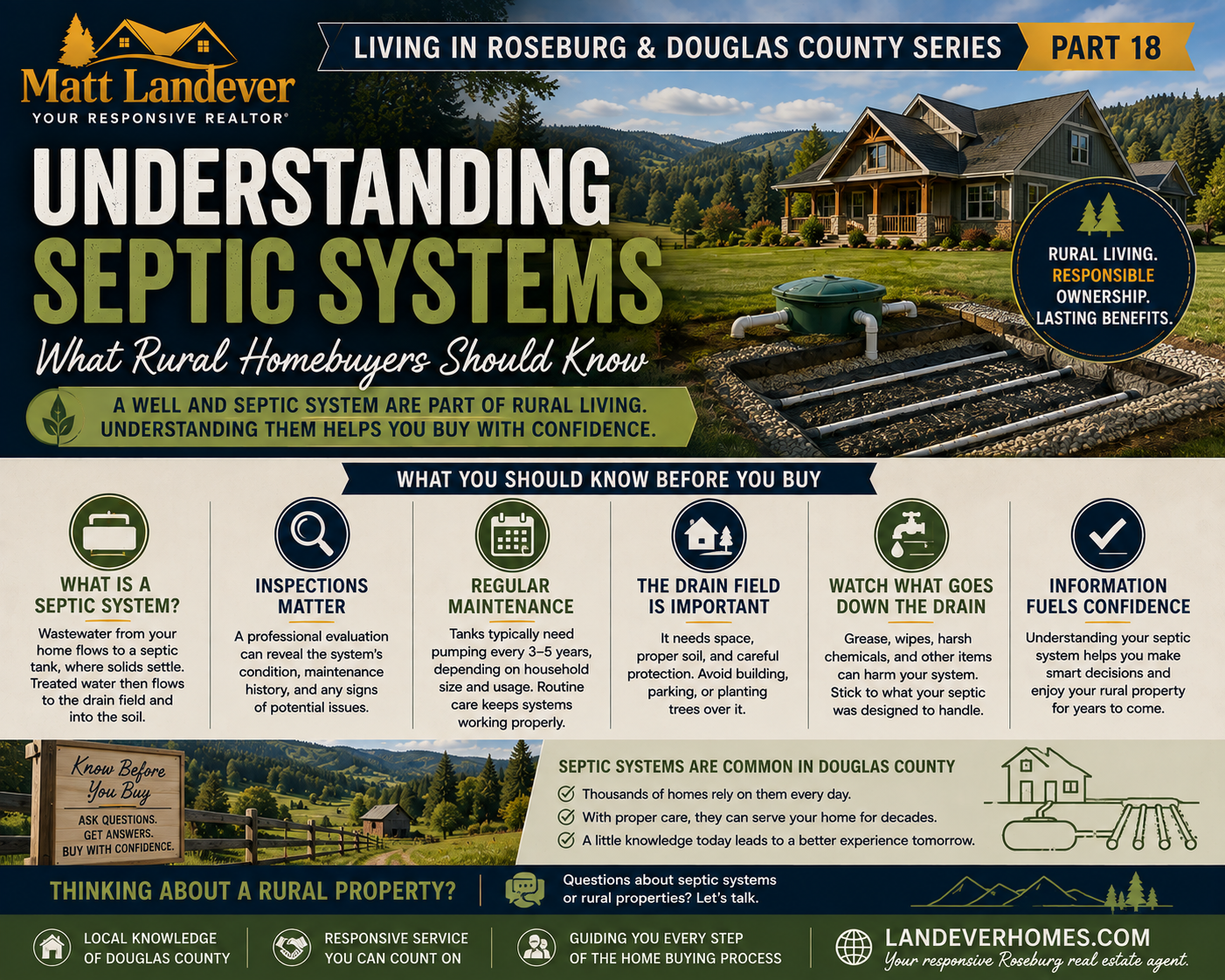
What Is a Septic System?
A septic system handles wastewater from the home when there isn't a connection to a municipal sewer system.
When you use a sink, shower, washing machine, or toilet, wastewater leaves the house and enters the septic system.
A typical system includes two major components:
The septic tank collects wastewater and allows solids to settle.
The drain field distributes treated wastewater into the surrounding soil.
There's more happening underground than that, but for a homebuyer, those are the two basic pieces worth understanding.
Is Having a Septic System a Bad Thing?
Not at all.
Many homes throughout Douglas County rely on septic systems every day.
The difference is responsibility.
With a public sewer, much of the infrastructure beyond your home's connection is maintained by the local utility. With a septic system, the homeowner is responsible for maintaining the system located on the property.
That's why understanding its condition before purchasing a home is important.
Should You Inspect a Septic System Before Buying?
When purchasing a home with a septic system, having the system professionally evaluated can provide valuable information about what you're buying.
Depending on the property and circumstances, an inspection may help determine things such as:
- The general condition of the system
- The condition of the tank
- Whether there are visible signs of problems
- When the tank may have last been pumped
- Whether additional evaluation is recommended
Just like a home inspection, the goal is information.
You want to understand the property before completing your purchase.
How Often Does a Septic Tank Need to Be Pumped?
There's no single schedule that applies perfectly to every home.
How frequently a tank needs pumping depends on several factors, including the size of the tank, number of people living in the home, water usage, and what goes down the drains.
A septic professional can help homeowners determine an appropriate maintenance schedule for their particular system.
The Drain Field Matters Too
Buyers sometimes focus entirely on the septic tank, but the drain field is another important part of the system.
The drain field needs suitable soil and adequate space to properly handle wastewater.
This also means you'll want to be thoughtful about what happens above and around it.
Building structures, driving heavy vehicles, or making certain improvements over a drain field can potentially cause problems.
Knowing where the system is located is an important part of owning the property.
Watch What Goes Down the Drain
Living with septic usually requires a little more awareness about what goes into your plumbing.
Things like grease, wipes, certain chemicals, and other materials can cause problems for a septic system.
Normal household wastewater is what the system was designed to handle.
For most homeowners, taking care of a septic system simply becomes part of normal home maintenance.
What If an Inspection Finds a Problem?
Finding an issue doesn't automatically mean the property is a bad purchase.
It means you have more information.
The significance can vary considerably depending on what was discovered. Some issues may involve relatively straightforward maintenance, while others could require repairs or further evaluation.
That's why having the system evaluated during the home-buying process can be so valuable.
You can understand the situation before making your final decision about the property.
Wells and Septic Systems Go Hand in Hand
If you're shopping for acreage in Douglas County, it's common to encounter both a private well and septic system on the same property.
That means you're essentially responsible for two systems that municipal utilities would normally provide:
Your well brings clean water into the home.
Your septic system handles wastewater leaving the home.
Once buyers understand that basic relationship, rural utilities tend to feel much less mysterious.
Final Thoughts
A septic system shouldn't automatically discourage you from considering a rural home.
Like a roof, HVAC system, well, or any other major component of a property, you simply want to understand its condition and how to properly maintain it.
For many Douglas County homeowners, wells and septic systems are simply a normal part of enjoying the extra space, privacy, and lifestyle that come with rural living.
If you're considering acreage or a rural home around Roseburg, I'm happy to help you understand what questions to ask and guide you through the due diligence process.
Check out this article next